

Nutrition: tailor-made feeding for your dog
Do you have questions about your dog’s nutrition? You’re in the right place!
Dogs differ according to several criteria: birth weight, litter size, growth rate, and lifestyle. Dogs can therefore be classified as small breeds (1–10 kg), medium breeds (10–25 kg), and large breeds (over 25 kg), and they do not all have the same nutritional requirements. For example, the requirements of a 50 kg dog are not 5 times, but 3.3 times, higher than those of a 10 kg dog. The needs of very small breeds should not be underestimated, nor those of giant breeds overestimated. The larger a dog is, the lower its calorie requirements per kg of body weight.
A Poodle bitch gives birth to 1 to 3 puppies, each weighing nearly 3 to 4% of their mother’s weight. In Great Danes, a litter will more typically contain 8 to 12 puppies, each weighing barely 1 to 1.5% of the dam’s weight. The higher frequency of difficult births and neonatal disorders observed in small breeds is therefore unsurprising. The extent and duration of growth also vary enormously. At one year old, a Poodle puppy will have multiplied its birth weight by 20, compared with approximately 100 times for a Great Dane. At 8 months, the former will have reached adult size, whereas the latter must wait until 2 years to reach its adult size. Dietary mistakes during growth will therefore have more serious consequences in large-breed dogs.
Other differences also come into play. The digestive tract of large-breed dogs is proportionally smaller than that of small-breed dogs: in a small-breed dog, it accounts for almost 7% of body weight, whereas it accounts for only 2.7% of the body weight of a large-breed dog. This lower digestive capacity may partly explain why the former more regularly experience episodes of soft stools or diarrhea unrelated to readily identifiable problems. The amount of food they need to consume to meet their requirements is nevertheless substantial, especially when their lifestyle is taken into account: large dogs are often working dogs or spend a large part of their time outdoors. Using more digestible, energy-dense foods and dividing the daily ration into 2 meals helps minimize these problems, including gastric dilatation-volvulus, which is common in large-breed dogs; to help prevent it, they should also rest after meals and, if necessary, rehydrate the kibble. Large-breed dogs, on the other hand, have larger jaws and prefer kibble of an appropriate size; observations made at the Saint-Nolff Research Center also confirm that small breeds prefer smaller kibble.
What are my pet’s lifestyle and life expectancy?
Dogs’ weight and temperament directly influence their lifestyle. Small-breed dogs are ideal companions for urban settings; they live mainly indoors. Their owners are therefore more likely to give in to their whims. As a result, they are at greater risk of receiving unbalanced portions that lead to obesity and of becoming more difficult to feed than medium- and large-breed dogs, which generally spend more time outdoors.
Advances in nutrition and veterinary medicine have considerably increased dogs’ life expectancy. However, significant differences remain between breeds: giant breeds (over 40 kg) rarely live beyond 7 to 8 years, while small breeds often live to 12 years or more. Size-based, tailored nutrition takes all these variations into account. Dogs’ nutritional needs differ greatly between the growth, adult, and mature stages of life. At each of these stages, the supply of nutrients (protein, essential fatty acids, minerals, and vitamins) must be optimal to support harmonious growth, maintain good physical condition, ensure a soft, shiny coat, maximize the body’s defenses, and promote longevity. Depending on the physiological characteristics described above, nutritional needs evolve quite differently at each stage for small, medium, and large breeds.
What food should I choose for my growing puppy?
Which kibble should I choose for my adult dog?
You can find some of our kibble right here
Retrouvez tous les produits Special One selectionnes par nos toiletteurs partenaires.
Voir la gammeContinuez la lecture
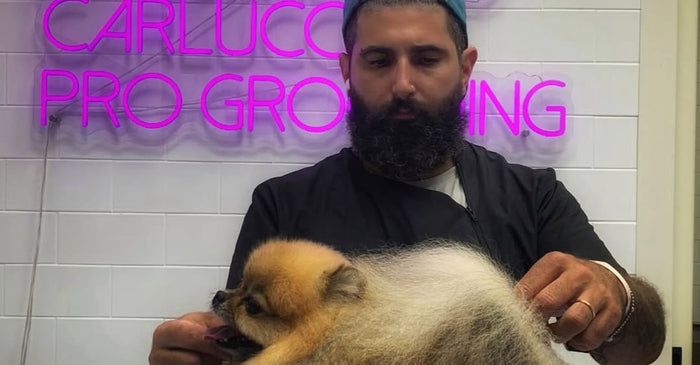
Training in Belgium by Massimiliano Carluccio & Special One France on Petdesign.fr
✨ Perfect your grooming with Massimiliano Carluccio! ✨ Do you dream of excelling in the art of dog groomin...
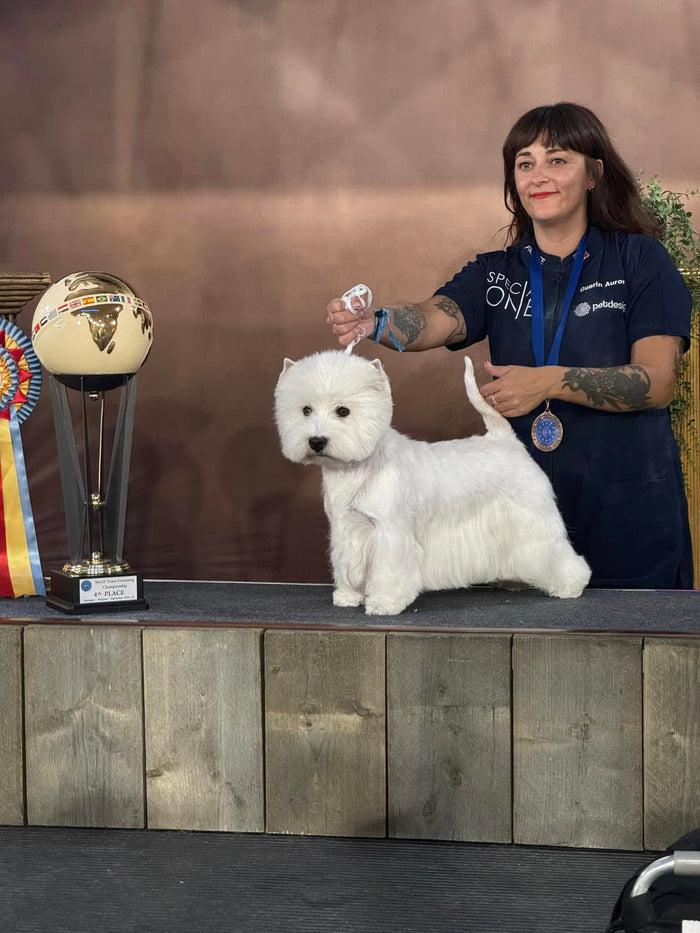
Aurore Guérin's training in Belgium & Special One France on Petdesign.fr
Perfect your technique with Aurore Guerin, a grooming champion! Dog grooming enthusiasts, this training da...
Perfect Poodle Grooming: Expert Advice for an Impeccable Coat
Do you own a poodle and are looking for the best grooming tips? You've come to the right place! In this art...
Réagir à cet article