
cosmetology zoo

The basics of Zoo Cosmetology
A comprehensive scientific background to better understand dog shampoos
General characteristics of dog shampoos
Shampoos are preparations that are most often liquid but can They can also come in the form of gels, creams, mousses, powders, which are intended for cleaning the animal's coat (the scalp and hair in humans). Dirt comes from oils secreted by the sebaceous glands, residues keratinized resulting from desquamation, organic and mineral residues from the the animal's mouth during licking, dust from the ambient air, microorganisms. They are also asked to beautify the coat. In addition, they must to be able to treat the surface of the hair, thanks to substances that attach to the surface of the hair.
Shampoos must possess the following properties (6):
• be acidic (minimum pH=5.2) or close to neutral (maximum pH=7.5),
but absolutely no alkaline products, so as not to damage the keratin and disrupt
the pH of the epidermis,
• have a not-too-strong detergent power so as not to 'stripping' the lipids
Excessive coat: sebum plays a role, as a major component of the film
lipid, to protect the skin against dehydration and guarantees the
The suppleness of the hair. Too strong a detergent effect would then cause
the maintenance or aggravation of seborrhea by a rebound phenomenon;
• be well tolerated,
• possess good physico-chemical stability,
• to be preserved perfectly,
• be easy to apply,
• form a creamy foam (psychological aspect of
the product's effectiveness),
• rinse easily and quickly
• allow for easy brushing of wet fur (long-haired dogs),
• to add shine,
• to have a pleasant scent for both the animal and the owner,
• to be economical,
• compensate for, or at least not aggravate, imbalances in the skin and/or the
coat resulting from various aggressions, internal or external (case of
medicated shampoos).
Coat care is based on certain rules and must be adapted to the individual case.
Each individual, that is to say, according to the type of fur but also the living conditions. It is certain that life
Urban life and the various forms of pollution it generates require more intensive maintenance.
Washing should be done regularly, regardless of the animal's breed.
The frequency can be as high as once every 5 days, but it depends mainly on the type of
shampoo used.
Every shampooing should be systematically followed by the application of solutions
Emollients whose purpose is to restore surface hydration and soften the skin.
Emollients will help restore shine to a dull coat.
Shampoo composition
Developing a shampoo requires a careful balance between the base
cleansing agent, formed from a combination of several surfactants, which constitutes the core of the formula,
and all other components (foam stabilizers, thickeners, pearlescent and opacifying agents,
softeners and superfatting agents, sequestering agents, pH adjusters, preservatives, perfumes and
colorants, "active" substances, which give it its physical and "cosmetic" qualities
and can, as needed, modify its performance.
Cleansing base: a combination of several surfactants
Possessing wetting, detergent, solubilizing, and dispersing properties,
Emulsifying and generally foaming, surfactants are the constituents
The main ingredients of a shampoo are, in a way, its "active ingredient." They represent...
average, in solution, 15 to 30% (weight or volume) of the formula.
PRINCIPLE OF ACTION:
They promote the spreading of water on the surface of the skin and hair, loosening the
dirt, emulsifies it, whether it is hydrophilic or lipophilic, and finally, facilitates its removal
removal by rinsing.
Note: their foaming power, which is in no way related to their detergent capabilities,
However, it allows you to monitor the washing process. Always synonymous with efficiency in
In the consumer's mind, the presence of lather is necessary for them, and for shampoos
40
Those that produce little or no foam, even if they are just as effective, are neglected because they are less
pleasant to use.
These are substances that have the power to modify surface properties
bodies at the interface of which they are placed, thanks to their amphiphilic structure comprising
a hydrophilic part and a lipophilic part.
Surfactants can be of natural origin (lecithins, sterols, saponins:
extracted from Panama wood (Quillaya saponaria, Rosaceae) or soapwort (Saponaria
officinalis, Caryophyllacea). Plant saponins are experiencing a resurgence of interest.
Excellent detergents (not too harsh), they leave no residue on the skin and do not
They do not cause any reactive seborrhea, which allows for their intensive use. One can
However, they are criticized for their lack of foaming.
But the most commonly used ones are synthetic.
These are classified into four main families, according to their mode of ionization in
Water. We can thus distinguish:
• anionic compounds, whose hydrophilic part ionizes with the formation of a charge
negative;
• cationic, which ionize with the formation of a positive charge;
• Amphoteric compounds, which ionize differently depending on the pH of the solution: in
In a basic environment, they exhibit anionic character, and in an acidic environment, a
cationic character;
• non-ionic, which do not ionize.
A shampoo formula always contains a combination of several
surfactants from different families because no single surfactant possesses all the
required properties.
Anionic surfactants
Anionic surfactants are widely used in the formulation of shampoos, including
They generally represent the base, at rates varying from 10 to 30%, most often
combined with an amphoteric surfactant (which improves their foaming power in hard water and their
tolerance) and/or non-ionic.
The following are employed:
• Alkyl sulfates: sodium lauryl sulfate, ammonium lauryl sulfate, triethanolamine,
of isopropanolamine… . An American study involving 438
shampoos showed that 24.4% of shampoos contain
sodium lauryl sulfate, 27.2% of ammonium lauryl sulfate and 22.4% of
triethanolamine lauryl sulfate;
• Alkyl ethers sulfates: sodium lauryl ethers sulfate, ammonium lauryl ethers sulfate,
triethanolamine, sodium laurylmyristyl ether sulfate….The same study (12)
that previously showed that 20.1% of shampoos contain
sodium lauryl ether sulfate;
• sulfonates: sulfosuccinates, fatty acid sulfonamides, acylisethionates,
alpha-olephin sulfonates…;
• Carboxylates: derivatives of amino acids (acylsarcosinates, acylates of
collagen or various other proteins from wheat, oats, corn, soy…),
polyoxyethylenated carboxylic acid salts… .
Note: soaps are no longer used in shampoos because, on the one hand, they
are very alkaline; on the other hand, they form with calcium and magnesium ions, contained in
a significant amount in hard water, insoluble salts that dull the coat and the
make it rough and difficult to brush (especially in long-haired dogs).
In general, anionic surfactants are good detergents (they possess a strong
affinity for dirt, positively charged; moreover, having no affinity for
Keratin, being negatively charged, does not redeposit on the hair and is perfectly
eliminated by rinsing), good foaming agents (although their foaming power is altered in
presence of hard water) and are inexpensive; they are sensitive to pH and exhibit
numerous incompatibilities with cationic 'surfactants'; some are irritating and
leave the fur too dry and difficult to brush.
Sulfonates and carboxylates, on the other hand, have very good tolerance.
Our preference is for carboxylates and, in particular, among them, lipoamino acids:
very mild cleansers with an acidifying character, lipoamino acids (palmitocystinic acid,
collagen acids…) are used in the composition of various intensive use shampoos.
In addition to their cleansing properties, lipoamino acids have the following properties:
o normalization of skin pH, by improving buffering capacity,
significant foaming property,
o no reactive seborrhea. Some shampoos cause after
usage leads to an exacerbation of the functioning of the sebaceous glands: this is
what is called reactive seborrhea. In a way
42
In general, the more often the dog is washed with this type of shampoo, the faster the
skin becomes oily;
o deposition of a lipoprotein film, which remains after rinsing.
Cationic surfactants
Highly substantial for keratin (because they are positively charged), they possess
bacteriostatic and fungistatic properties are utilized in the formulas.
anti-dandruff agents. Their affinity for hair, however, means they are mainly used as
Conditioners and film-forming agents: they are thus presented as coating and detangling agents.
They allow the hair cuticle to smooth (by remaining in film form on the hair, they seal
the scales (or prevent them from separating), restoring its softness and shine and
They make brushing easier. However, this affinity for hair makes them difficult to remove.
The following are used in particular:
• Quaternary ammonium salts:
o short-chain: benzalkonium chloride, chloride of
cetylpyridinium chloride, cetyltrimethylammonium chloride, chloride of
dimethylphenylammonium…;
o long-chain: quaterniums, polyquaterniums…; the more you increase the
The longer the 'fat chain', the greater the 'smoothness' effect.
The American study (12) showed that 18.3% of shampoos
contain quaternium-15 and 12.6% contain quaternium-19;
• amine salts: octadecylamine hydrochloride…, etc.
They are used in proportions ranging from 5 to 10%, generally associated with
Amphoteric and non-ionic surfactants, particularly in certain medicated shampoos
(anti-squamous).
Many are irritating, even aggressive and harsh; they are also bad
detergents (because they are positively charged like dirt) and poor foaming agents: they do not
Therefore, they do not constitute the cleansing agent in a shampoo but contribute to improving the
hair surface. They are pH sensitive and incompatible with surfactants
anionic. However, cationic polymers have brought a breakthrough to this field
Notable improvement: their particular structure and the low concentrations used (0.5 to
1%) allow them to be associated with anionics.
Amphoteric surfactants
Also called ampholytes, they have the particularity of behaving differently
depending on the pH of the solution: below their isoelectric point, that is to say at a higher pH
acidic, they are cationic and compatible with cationic acids; above, at a more alkaline pH,
They are anionic and compatible with anionic substances. At their isoelectric point, they are at the
both carry positive and negative charges and are therefore compatible with all others
surfactants.
Among the most commonly used are:
• Betaine derivatives:
o alkylbetaines (laurylbetaine, cocobetaine…),
o alkylamidobetaines (laurylamidobetaine, etc.),
o alkylamidopropyl betaines (laurylamidopropyl betaine,
cocoamidopropyl betaine…),
o sulfobetaines (laurylhydroxysulfobetaine,
laurylamidohydroxysulfobetaine…);
• Imidazoline derivatives:
o alkylamphoacetates (disodium cocoamphodiacetate…),
o alkylpolyaminocarboxylates (carboxymethyl coco polypropylamine
sodium, sodium carboxymethyl oleyl polypropylamine);
• Alkyl polypeptides: obtained by the action of an acid chloride on
protein hydrolysates or amino acids
(alkylamidopropyldimethylamino polypeptide…).
They are low in irritants, have good foaming and detergent properties, are stable and
possess a slight conditioning power.
The cost price is relatively high. They are generally used at rates of
the range of 5 to 15%.
They are frequently associated with anionic compounds, whose foaming power they enhance.
in hard water and skin and eye tolerance. They are also widely used in
shampoos for frequent use (as well as baby shampoos for humans).
Non-ionic surfactants
They are good solubilizers, emulsifiers, wetting agents, and dispersants. Their
Foaming performance is generally limited, they are weak detergents, and they do not
are not substantive for keratin.
Among the most commonly used:
• polyoxyethylene glycol esters (PEG stearate…),
• sorbitan esters, polyoxyethylenated sorbitan esters (polysorbates),
• sucrose esters or sucro-esters (sucrose distearate,
sucrose monodistearate, sucrose monopalmitate…),
• alkylpolyglucosides (decylglucoside, laurylglucoside, etc.),
• fatty acid amides: (monoethanolamides, diethanolamides,
fatty acid isopropanolamides). The American study (12) showed that 42.2%
shampoos contain lauramide DEA and 30.4% contain
cocamide DEA
Relatively expensive, they are generally used as secondary 'surface agents' or
'co-surfaced'.
Being compatible with other surfactants, they are often combined with them (at a rate of
5 to 15%), which helps to reduce the level; active, regardless of pH, they are less
irritants than ionic 'surfactants'.
They improve the qualities of shampoos in the presence of calcium salts and facilitate
Rinsing. Combined with cationic agents, they improve the detergent power of the shampoo.
Foam stabilizers
A symbol of cleanliness, foam is one of the characteristics of shampoos that...
users appreciate it the most, believing it to be inherent to their efficiency, which is not
True. That being said, the foam does allow you to follow the washing process, a peeling
dirty, rich in sebum, causing a significant reduction in lather.
Its qualities are assessed according to various criteria, including its training speed,
its development, its density, its viscosity, the size of the bubbles, its stability, its ease
elimination. They are strongly influenced by the structure of the surfactants chosen.
The addition of foam stabilizers helps to improve its firmness and smoothness.
They also often act as 'superfatting' and softening agents.
This is achieved using certain non-ionic surfactants such as fatty acid amides:
monoethanolamides, diethanolamides, fatty acid isopropanolamides, in particular
copra, but also certain amphoteric and polymeric compounds, at levels of around 3 to 4%.
Thickeners
They increase the viscosity of the shampoo to make it easier to apply.
They also alter the texture, appearance, and feel of the product. They are used
generally at concentrations ranging from 2 to 10%. They are chosen not only by
depending on the parameters described above, but also according to technical criteria:
compatibilities, particularly with the selected surfactants, pH of use, resistance to
suspension, ability to prevent redeposition of soiling, etc.
Depending on the case, they may be:
• Electrolytes: sodium chloride, magnesium chloride, ammonium chloride, sulfate
ammonium…;
• Naturally derived polysaccharides: guar gum, tragacanth gum, xanthan gum,
alginates, carrageenates, etc.;
• cellulose derivatives: methylcellulose, hydroxyethyl or
hydroxymethylcellulose, carboxymethylcellulose… . The American study (12) has
showed that 18.7% of shampoos contain
hydroxypropylmethylcellulose;
• carboxyvinyl polymers;
• polyvinyl alcohols and polyvinylpyrrolidones;
• Alkanolamides (fatty acid amides): monoethanolamides,
diethanolamides, fatty acid isopropanolamides… .
Pearlescent and opacifying agents
They alter the appearance of shampoos, giving them a creamier look and
a precious quality that helps establish or reinforce the product's image. Pearlescent coating can
also allow to mask a disorder caused by certain components of the formula.
This pearly effect is caused by waxy-looking substances that are dispersed
in surfactants and whose particles, which are in the form of flakes or
Crystals reflect light.
These are primarily fatty alcohols such as cetyl alcohol, stearyl alcohol, and
fatty acid alkanolamides, monoesters or diesters of ethylene glycol… which are
They are used. They often also act as fabric softeners.They are added to a
concentration of approximately 1%.
Fabric softeners and superfatting agents
Their role is to make brushing easier after shampooing, and to give the coat shine
and softness (which is not recommended for wire-haired dogs).
We use:
• Fatty acid derivatives: alcohols or fatty esters,
• Lanolin and its derivatives: lanolin alcohol, acetylated derivatives, lanolin
oxygenated…,
• vegetable oils: sesame, wheat germ, corn, calophyllum…
• animal oils: mink…,
• vegetable waxes: jojoba…,
• humectants: glycerol, sorbitol, propylene glycol. The American study (12) has
showed that 21.9% of shampoos contain propylene glycol;
• protein hydrolysates The same study (12) showed that 37.9% of
shampoos contain hydrolyzed animal proteins.)
• cationic polymers,
• lecithins and their derivatives.
Their concentration varies from around 1 to 5%.
The kidnappers
Added at levels close to 0.1%, they complex with calcium and magnesium ions
present in rinsing water to prevent the formation of insoluble salts that alter
the quality of the lather and dull the hair. The most commonly used are salts of
ethylenediaminotetraacetic acid (EDTA) or sodium hexametaphosphate.
pH adjusters
The skin is an integral part of the immune system because it contains, in a way,
constant of elements specific to the immune system (macrophages, lymphocytes, …),
but also because its own cells are capable of actively participating in
development of inflammatory reactions.
37
The Conservatives
Their role is to inhibit the growth of bacteria and yeasts and to prevent the
fermentations. The most commonly used are parahydroxybenzoic acid esters (parabens),
sorbic acid, imidazolidinyl urea, phenoxyethanol, methylisothiazolinones and
methylchloroisothiazolinone (the American study (12) showed that 54.8% of shampoos
contain methylparaben and 35.6% propylparaben). They are generally used in
predefined associations, so as to cover the broadest possible spectrum of activity
as well as a significant pH scale. They are added at concentrations close to
0.1%, but they must be chosen wisely because many of them can be
inactivated by 'surfactants'.
Antioxidants (tocopherols, etc.) are only used if the formula contains
easily oxidizable lipids.
Perfumes and dyes
They give the shampoo its character, both olfactorily and visually,
giving it a pleasant smell and appearance. The appearance is solely the owner's prerogative.
The scent is pleasant to both the owner and the dog.
The scent must be acceptable to the animal; that's why we will avoid all perfumes.
citrus peels (lemon, orange) are very pleasant for the owner but repellent for
the animal. We have very little information regarding the scents that animals prefer.
dogs. The manufacturers who use these substances keep it secret for reasons
commercial.
Their choice depends not only on their qualitative criteria and stability,
but they must also preserve the stability of the base in which they are incorporated.
as well as its physicochemical characteristics: viscosity, solubility, pH. Their compatibility
with the other components, including the packaging, is taken very seriously
taken into account. Perfumes are most often solubilized thanks to the presence of surfactants.
They are used at concentrations of around 0.1%.
The active substances: keratolytics, Keratoregulators and anti-seborrheic agents.
These active substances are added to formulas to give them properties
specific. They are particularly numerous and are grouped into several subgroups:
• Keratolytic agents: they reduce the thickness of the stratum corneum and
eliminate the scales, which is particularly beneficial in cases of disorders of
Keratinization (seborrhea). Salicylic acid is a major keratolytic agent.
which acts by lowering the pH and increasing the amount of absorbable water
through keratin: the stratum corneum softens and is easily shed. It is
It is frequently associated with sulfur because there is a synergy between their actions. It is
more bacteriostatic.
• Keratoregulatory agents: they reduce the rate of cell division
germinal cells of the basal layer during excessive acceleration of their
renewal. Purified coal tar is the leader in
keratolytic agents, and the most used in veterinary dermatology, but it presents
The major drawback is that it is too aggressive and can cause seborrhea.
rebounds. Its use in humans is prohibited by law.
European since June 30, 1999 because it contains hydrocarbons
Polycyclic aromatic hydrocarbons (including benzopyrene), known carcinogens
genotoxic substances, in very high concentrations, whether crude or refined.
Low-benzopyrene tars are being developed to replace it.
Cade tar and ichthyol exist: the latter is used as
keratoregulatory agent in human dermatology and due to its very high
tolerance, it can be used in dogs against dry seborrhea or
fats.
• Anti-seborrheic agents: they reduce sebaceous production and
Secondarily, the blockage of the hair follicle. Sulfur is classified as
anti-seborrheic. Its anti-seborrheic activity is currently considered
is real but poorly explained. Its frequent use should be reserved for cases of
Oily seborrhea because it can cause irritation and sebaceous secretions
rebounds.
Medicated shampoos
Among other things, we have:
• Anti-seborrheic shampoos: characteristics and needs
Oily coats are the focus of these shampoos' formulations:
o an effective but gentle detergent action (amphoteric and non-ionic,
particularly polyglycol derivatives [which slow down the
regreasing], Quillaya extracts rich in saponins…) in order to eliminate
excess sebum without causing lipid depletion
excessive which could be a source of reactive seborrhea, and without
to further irritate the skin,
o the incorporation of substances intended to regulate sebum flow, to
to slow its migration onto the coat (cedar essential oil, acids)
sulfur amino acids, various plant extracts [nettle…], vitamin B6,
astringents, sebum-regulating agents…) and to cleanse the skin in such a way as to
to avoid excessive microbial growth (essential oils)
antiseptics…),
o an absorbent function of sebum (clays…).
• Anti-dandruff shampoos: to eliminate flakes
and to prevent or limit their recurrence, shampoo formulas must
include:
a gentle yet sufficiently effective detergent base to remove
adherent scales and are completely harmless to the skin which is already
very disturbed,
o bactericides and fungicides to limit proliferation
microbial (piroctone olamine, zinc pyrithione, derivatives)
undecylenic acids, various antiseptics including quaternary ammonium compounds…),
o active ingredients that slow down cell renewal
(keratolytic agents: cade oil, ichthammol derivatives…) and which
eliminate scales (keratolytic agents such as salicylic acid…),
o anti-inflammatory and soothing substances (Aloe Vera, extract)
(Chamomile, oat colloid, etc.) to soothe itching
frequently associated with these conditions.
Manufacturing process
The manufacturing process typically involves three stages. :
The first step is to mix the water-insoluble components.
(methylparaben, propylparaben, jojoba oil) with propylene glycol.
The second step involves incorporating the previous mixture into the purified water.
preheated to facilitate dissolution, then, after pH stabilization, to be added
pH-sensitive compounds (ammonium lauryl sulfate).
Volatile substances, such as perfumes, are added once the temperature
falling below 40° Celsius, which constitutes the third and final stage of the
manufacturing.
The manufacturing process typically involves three stages. :
The first step is to mix the water-insoluble components.
(methylparaben, propylparaben, jojoba oil) with propylene glycol.
The second step involves incorporating the previous mixture into the purified water.
preheated to facilitate dissolution, then, after pH stabilization, to be added
pH-sensitive compounds (ammonium lauryl sulfate).
Volatile substances, such as perfumes, are added once the temperature
falling below 40° Celsius, which constitutes the third and final stage of the
manufacturing.
Our Shopping List
Here is our selection!
Retrouvez tous les produits Special One selectionnes par nos toiletteurs partenaires.
Voir la gammeContinuez la lecture

The R&D at Special One
Special One: The perfect alchemy of nature, science, and cosmetic innovation at the service of animals ...
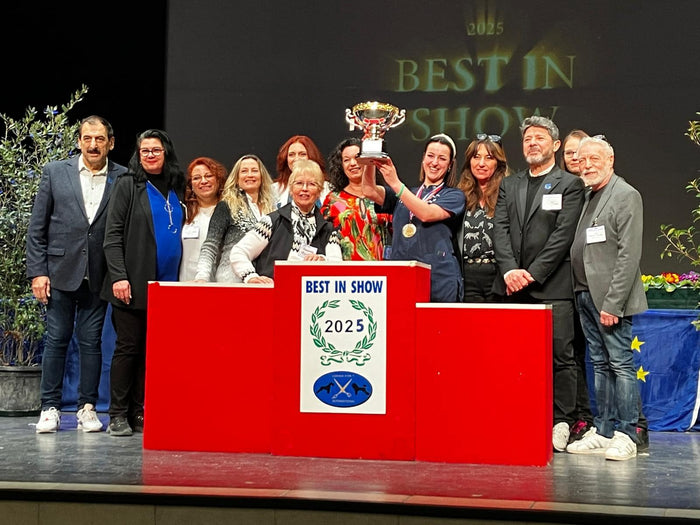
Allison Cabibbo: for the 3rd time in a row, the European Grooming Championship is won by a Special One groomer
We are incredibly proud to announce that our Special One ambassador has just won the prestigious title of E...
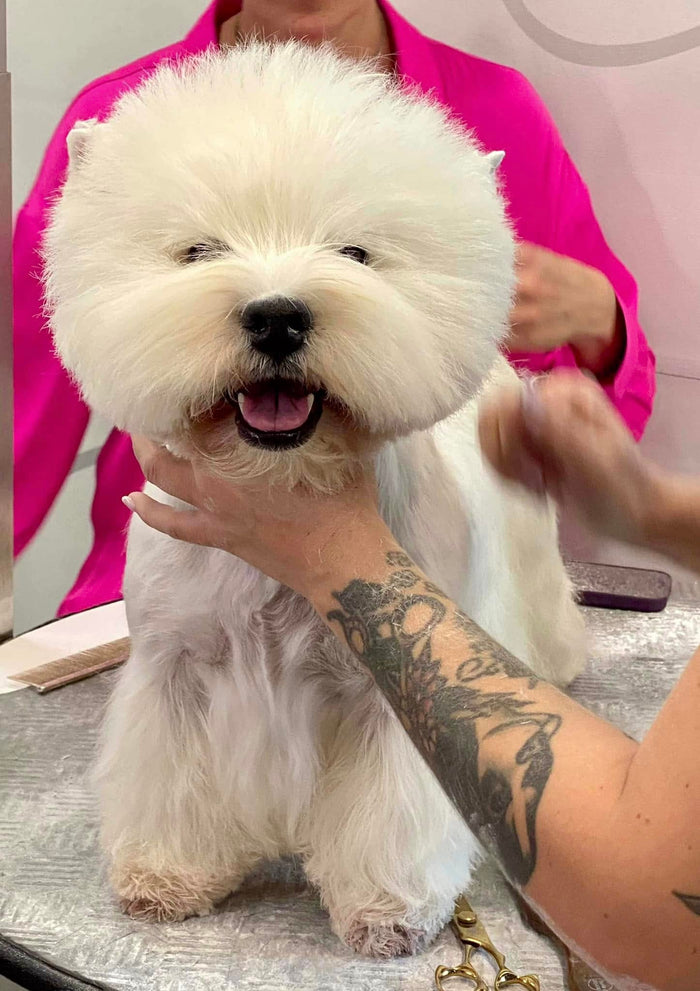
West Highland White Terrier Grooming by Eve Raison & Aurore Guérin with Special One
A big congratulations to these talented groomers, members of the French grooming team, Eve Raison and Auror...
Réagir à cet article