


Health: DOGs, food allergies
Do you have questions about food allergies?
If you can't find what you're looking for, send us a message.
While food allergy involves immune mechanisms with the presence of antibodies, food intolerance, which is much more common, is caused by a toxic food or poor digestion... The most common case is diarrhea following the ingestion of milk after puppies have been weaned; their intestines may indeed be unable, for a certain period, to produce the enzymes (lactases) capable of digesting milk. Everything returns to normal a little later.
Which dogs are most susceptible?
Food allergy seems to affect all individuals, regardless of sex or race. That said, one study showed that Labradors, Cockers, German Shepherds, Boxers, Collies, and Springers are more susceptible to this condition. We know that in humans, food allergy manifests in multiple forms: mainly eczema, asthma with or without digestive problems, or migraines, colic, etc. — even shock. In dogs, however, the symptoms of this disease affect only the skin and digestive tract. Many foods can trigger an allergic reaction: beef, horse, or pork meat and offal; fish; milk; eggs; wheat (including wheat gluten); corn; potatoes... Food allergy is estimated to account for 10% of allergies that manifest in the skin. This allergy can develop late, as the animal may have eaten the food responsible for two years or more before becoming ill! More commonly, however, symptoms begin early, most often before the age of one. When a young dog has been treated for external parasites (fleas, mange mites, harvest mites, etc.) and continues to scratch, a food allergy should be considered.
What are the signs of a food allergy in a dog?
Dogs experience skin problems, digestive disorders, or both at the same time in 15% of cases. Digestive symptoms are typical: the stools are soft or watery, the dog defecates frequently, has diarrhea with or without vomiting, refuses to eat, and loses weight. If the colon is inflamed, the diarrhea is bloody. Skin problems, on the other hand, are not very characteristic of the condition. In general, the dog scratches regardless of the season; it may sometimes develop papules and, in some cases, a skin infection that remains very difficult or even impossible to cure because it returns after the antibiotics are stopped. When the food allergy has persisted for a long time, the skin produces too much sebum, becomes greasy, darkens, and thickens. Another sign is that corticosteroid treatments are not very effective. The dog may also have an episode of hives, causing it to scratch its belly, head, and especially its ears. It may develop allergic otitis, with irritated, red ear flaps and ear canals.
Should I have tests done if I think my dog has food allergies?
What should I do to confirm that my dog has a food allergy?
What can I buy?
Here is a selection of the products we offer
Retrouvez tous les produits Special One selectionnes par nos toiletteurs partenaires.
Voir la gammeContinuez la lecture
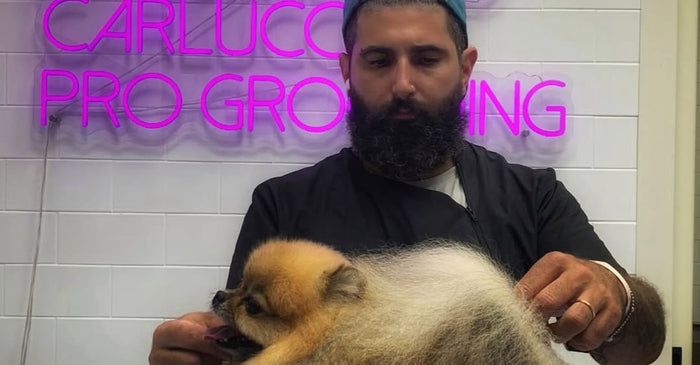
Training in Belgium by Massimiliano Carluccio & Special One France on Petdesign.fr
✨ Perfect your grooming with Massimiliano Carluccio! ✨ Do you dream of excelling in the art of dog groomin...
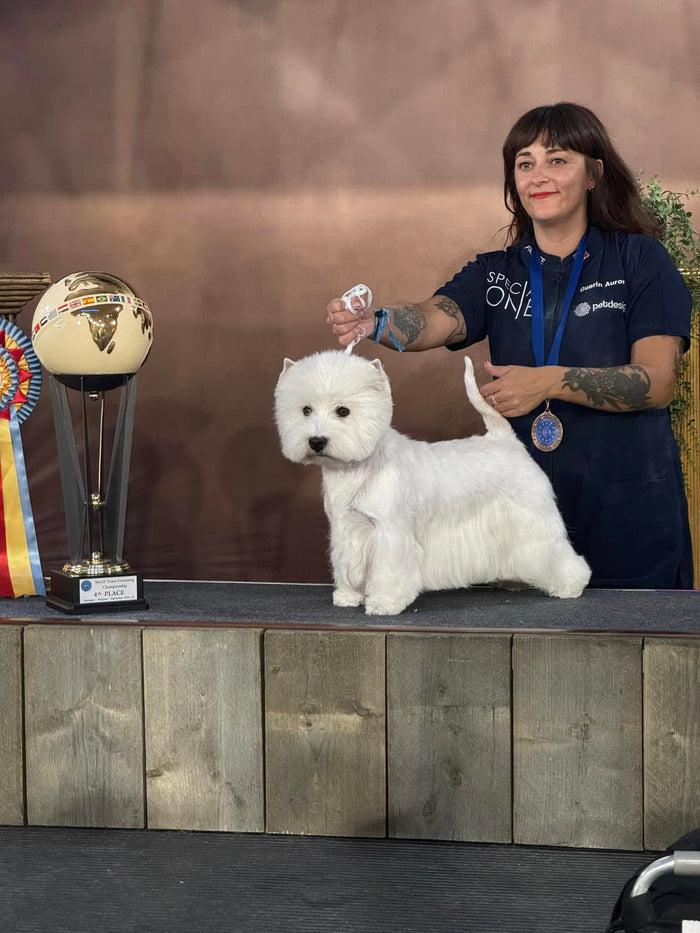
Aurore Guérin's training in Belgium & Special One France on Petdesign.fr
Perfect your technique with Aurore Guerin, a grooming champion! Dog grooming enthusiasts, this training da...
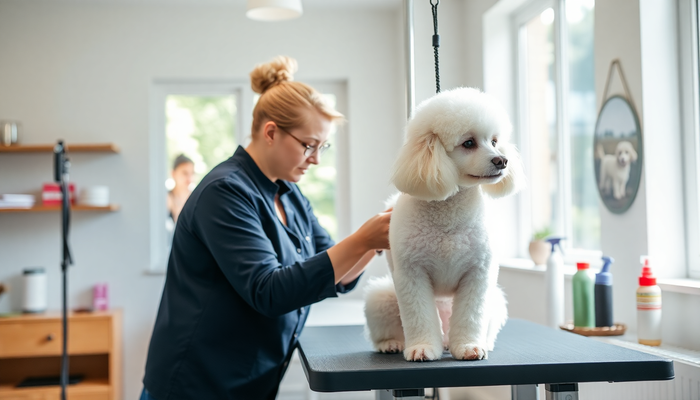
Perfect Poodle Grooming: Expert Advice for an Impeccable Coat
Do you own a poodle and are looking for the best grooming tips? You've come to the right place! In this art...
Réagir à cet article