

Newfoundland

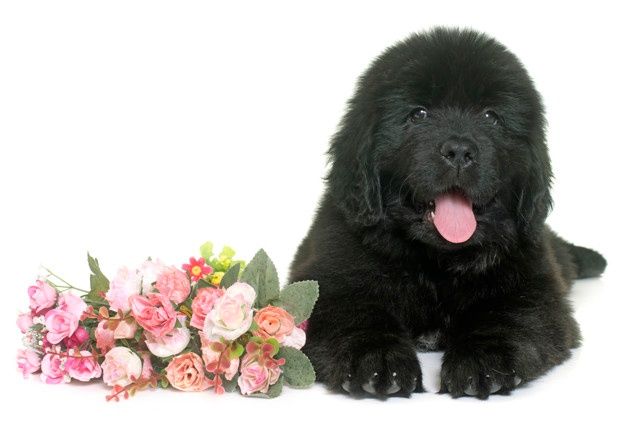
NEWFOUNDLAND: dedicated breed profile & GROOMING
Simple Program & Effective :
AQUAROSA PRO, HYDRATING CREAM & ABSOLUTE 4POODLE
Full Program & Ambitious :
BIO ENERGY, BOMBASTIC
4POODLE PRO, AQUAROSA PRO
EXTRA BODY CREAM, HYDRATING CREAM, BOMBASTIC
STYLE 360, ABSOLUTE 4POODLE
Working in the water with the Newfoundland
The Newfoundland carries with it a rich legend as the Saint Bernard of the seas, but it is only in the last twenty years or so that French enthusiasts have organized themselves to develop its qualities. Drawing inspiration from English regulations of the previous century and from trials conducted with their dogs, they developed a water work program approved by the SCC (French Kennel Club) in 1981. The breed club created its working committee, and the discipline was then officially recognized in France. Selection incorporates the perpetuation of rescue qualities, since passing a Natural Aptitude Test, created to verify obedience, endurance, and affinity for water, is necessary for the homologation of the title of French Champion of Conformity to the Standard. Numerous working sections now exist in several departments.
The Newfoundland is a valuable asset in rescue operations. Perfectly suited to water work thanks to its water-repellent coat, physical strength, stamina, and tenacity, it can excel in various situations: accompanied by its handler, it can help bring back a tired swimmer who will cling to its coat or harness, or an unconscious person whom it will grasp by the wrist. It can bring a towline to a disabled boat, tow boats adrift offshore or near rocks, even when heavy swells sometimes prevent rescuers from getting close to the person in danger. It can monitor sailing competitions, or even be used in flood situations to reach those affected or clear uprooted branches and trees.
Like any discipline, the Newfoundland's effectiveness in sea rescue is obviously a matter of proper training with a well-behaved dog. As with avalanche rescue training, the initial focus is on the bond the dog has with its handler. Indeed, Newfoundlands naturally play in the water with their family with great enthusiasm, and if they possess a rescue instinct, it is primarily to come to the aid of a family member, or even to bring them back to shore if they fall into the water.We then work specifically on its obedience, its impressive pulling power, its swimming endurance, its sense of connection and its gripping technique, which must not be clumsy or exuberant but perfectly controlled, in order to truly help the man in difficulty and not put him in more danger than he already is!
What are the colors of the Newfoundland dog?
Three colors for one breed. The Newfoundland is the best known and most widespread in its jet-black color; it may have white markings on the paws, chest, and tail without being penalized in shows; however, the white should not be too extensive or extend up the belly. A slightly reddish tint is also acceptable, particularly in summer. The Newfoundland less frequently sports a brown coat, tending towards bronze or chocolate, with a matching nose and mucous membranes and lighter eyes; a faded shade is not desirable, but white markings are acceptable in the same way as for black. The oldest coat color is perhaps black and white, as it is often seen in dogs depicted in old engravings; it was originally associated with a slight bone deficiency. A black head and well-distributed black markings are particularly desirable; slight ticking on the paws is acceptable. Although popular with the public, this is the rarest color because it is the most difficult to produce with a harmonious distribution of black and white. Americans also recognize gray, a dilution of black. The three colors are presented together in exhibitions, but they are not paired indiscriminately; the dominant black can be paired with the recessive brown or black and white, but no pairing occurs between the latter two colors, to avoid producing non-conforming, likely tricolored, specimens.
Newfoundland health: the vet moment
The Newfoundland is a robust dog, although its lifespan of around 8 years is common among other molossers or other dogs that deviate from the canine average; however, individuals living to 10 or 12 years are sometimes recorded. Its rapid growth must be carefully monitored; a 2-month-old puppy already weighs around 12 kilos, and depending on its sex, will reach 50 or 70 kg ten months later. A conscientious breeder therefore provides their clients with detailed feeding instructions, which, depending on the breeder, will consist of kibble or homemade rations fortified with mineral and vitamin supplements. As with many large dogs, jumping and prolonged running are discouraged before the puppy reaches 12 months of age, in order to protect its still-developing joints.Reproduction is not a problem and it is not a particularly difficult breed to raise.
The breeding stock is typically x-rayed to screen for hip dysplasia; for the homologation of the French Champion of Conformity to Standard title, dogs are accepted up to stage C; although statistics are unavailable, it can be assumed that the breed is probably less affected than other, heavier molossers. The Newfoundland does not appear to be affected by eye defects; it should be noted, however, that it does not tolerate heat well, especially as it ages, when higher temperatures can affect it to varying degrees.
The following health tests should still be carried out before breeding your Newfoundland:
- Cardiac Test: ASO-PSO
(the aim is to detect dogs suffering from aortic stenosis but also from any other heart disease (congenital or acquired)
- Cystinuria screening
(Checking for the absence of kidney dysfunction; cystinuria is a cause of persistent kidney stones, notably characterized by high concentrations of the amino acid cysteine in the urine, which leads to the formation of cystine stones in the kidneys, ureter, and bladder.)
- Hip dysplasia & Elbows
History and origins of Newfoundland
This Canadian breed with its mysterious origins has, in just a few decades, won the favor of an ever-growing public, captivated by its magnificent, often black coat, its gentle temperament, and its reassuring personality. But the Newfoundland, the very embodiment of the endearing and friendly big dog, is also officially recognized as a sea rescue dog. This prestigious reputation as a human's helper contributes to its success: in France, as in other countries, it is beginning to be considered one of the most fashionable breeds.
Native or immigrant?
In the case of many dog breeds, the story of their origins before the modern era raises more questions than it answers. The Newfoundland is no exception; its development is so shrouded in mystery that it's impossible to determine with certainty whether it was native to North America or if its ancestors were brought to the island from which it takes its name by early European settlers. Conflicting hypotheses abound.
The island of Newfoundland is part of the province of the same name, the easternmost in Canada; located in the Gulf of St. Lawrence, it is separated from Labrador by the Strait of Belle Isle.It is a plateau of medium altitude with a rugged coastline and a harsh climate, only the southern coast being ice-free in winter. Several centuries after the arrival of the Vikings, it was rediscovered in 1497 by the Italians Giovanni and Sebastiano Caboto, father and son, who were searching for a northern sea passage to China on behalf of King Henry VII of England. In 1500, the Portuguese navigator Gaspar Corte Real also reached Newfoundland. Following them, and from the 16th century onwards, numerous English, French, Basque, and Portuguese fishermen came to fish in the area, attracted by the magnificent cod stocks that made the island famous and remain its main source of wealth to this day. Sir Humphrey Gilbert claimed it for England in 1583, but the French and English settled there almost simultaneously at the beginning of the 17th century. The acute rivalry between the two colonizing powers for the possession of Canada as a whole subsequently had the outcome we know, with France officially retaining only the islands of Saint-Pierre and Miquelon located south of Newfoundland.
Did these settlers find dogs upon their arrival on the island, which they then paired with those they brought on their ships, or were these dogs of diverse origins the only canine population that ever existed on Newfoundland? Of these two main theories on the genesis of the breed, the first is briefly mentioned in the standard, but the second seems to many dog lovers today to be the most likely; similar assumptions can be applied to the other dog of Canadian origin, the Labrador, and it is not unreasonable to think that there was a connection between the two in the beginning, the two territories being so close.
The settlers' dog
The dog is certainly not an unknown species on the North American continent; Native American tribes possessed them, and one only has to think, for example, of the Athabascan or Malhemut Indians who used Nordic-type dogs for sledding; it is said that other ethnic groups were accompanied by a dog, often black, which may have been one of the ancestors of the Newfoundland. Consequently, some suggest that the Newfoundland descends from the Tibetan Mastiff, like all long-haired molossers, the latter having migrated along an east-west axis. It is important to know that during cyclical periods of climate cooling, the Bering Strait, separating eastern Siberia from Alaska, became a strip of land acting as a bridge between Asia and America; this is also how people of Mongolian descent populated America, where the human race was previously unknown, forming the vast Native American population. But this occurred during the Upper Paleolithic period; between 27,000 and 12,000 years before our era, and this was the last time the bridge was opened; it cannot be certain that a molosser-type dog was already individualized at that time; this is why proponents of the native breed hypothesis sometimes think that the ancestors of the Newfoundland are close, at least originally, to polar dogs.
According to other theories, Newfoundland's ancestor was a dog brought by the Vikings when they settled on the island between the 11th and 13th centuries; L'Anse-au-Meadow, on the northern coast of Newfoundland, is indeed a major archaeological site in the study of their few settlements in the New World.Proponents of the European theory, on the other hand, point out that according to some navigators, such as Captain Whitbourne in the 17th century, the island was devoid of dogs before the arrival of settlers. Attempts have therefore been made to determine which types of European dogs might have contributed to the breed's development; here again, no certainty is possible. The Saint Bernard and the Great Pyrenees are cited, but these breeds now have dewclaws on their hind legs, highly transmissible characteristics that the Newfoundland lacks. A certain Benion also suggested in the last century that the breed originated from a cross between some kind of mastiff and the Barbet, a water dog and ancestor of the Poodle, which seems rather unlikely.
In any case, and although some breeders today question the traditional use of dogs in the water, it seems that a dog, undoubtedly of a very heterogeneous type, customarily served as a fishing assistant to the early settlers who became Newfoundland fishermen, pulling nets or boats, and perhaps rescuing shipwrecked sailors. As dogs became very numerous on the island, Governor Edwards decided to limit them to one per household. Since the island was still under British protectorate, it was at the end of the 18th or the beginning of the 19th century that specimens from Newfoundland arrived in England; the English, precursors of modern dog breeding, would shape them, though it remains unclear exactly how they obtained the Newfoundland we know today.
We hope our advice has helped you in your research and that you now know which path to take to maximize your chances of achieving a stunning result!
Our Shopping List
Here is our selection!
Retrouvez tous les produits Special One selectionnes par nos toiletteurs partenaires.
Voir la gammeContinuez la lecture

The R&D at Special One
Special One: The perfect alchemy of nature, science, and cosmetic innovation at the service of animals ...

Allison Cabibbo: for the 3rd time in a row, the European Grooming Championship is won by a Special One groomer
We are incredibly proud to announce that our Special One ambassador has just won the prestigious title of E...

West Highland White Terrier Grooming by Eve Raison & Aurore Guérin with Special One
A big congratulations to these talented groomers, members of the French grooming team, Eve Raison and Auror...
Réagir à cet article