

News
HOW TO DEAL WITH EXCESSIVE BARKING ?

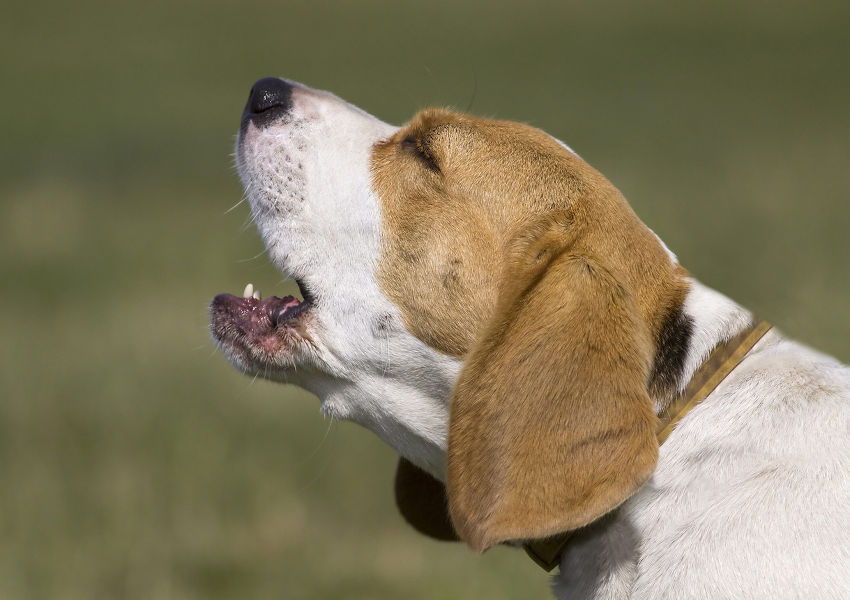
HOW TO MANAGE EXCESSIVE BARKING?
Dogs bark because they need to express their emotions by barking. Some are more expressive than others.
A well-balanced dog in a suitable habitat only barks occasionally. For some dogs, however, any excuse is good enough to bark, which doesn't make them any happier.
The dog must learn to control its barking, that is, to only bark on appropriate occasions, and the same applies to how it must learn to control its urination, not to jump on the sofa, not to bite, etc. This is part of its training.
It is easier to do this from childhood, by guiding them and helping them understand what is right and what is wrong.
But unfortunately, there are many cases where it is not managed properly. Uncontrolled barking is a problem that goes beyond what any owner is willing to put up with.
Problems caused by barking dogs, such as complaints from neighbors, clashes during walks with other dogs, cyclists, joggers, or pedestrians, etc., create a need for immediate solutions in the owner. Sometimes, depending on the severity of the problem, drastic measures are taken, which are very painful for the owner and even more so for the dog itself.
There are many reasons why a dog cannot learn properly: lack of or poor training, environmental circumstances, poor boredom management, personality problems such as anxiety, insecurity, fears...
Whatever the cause, to stop the dog from barking when it shouldn't, you have to stop it.
But how can we do it? Are we capable of preventing it?
Putting a collar on our dog to prevent him from barking without any worry, pain or risk of error, and without our presence being necessary, guarantees the effectiveness of his learning.
What is he doing?
When the dog barks for the first time, one of the electrodes detects the vibration of the vocal cords and the collar delivers a pulse.
The dog is startled by this first impulse, but he doesn't understand anything yet. The second or third time he barks, the dog realizes that this unpleasant sensation is due to his barking and the collar.
And that's all. From then on, as long as the collar is in place, the dog does not bark.
Electrostatic electricity
It's a different kind of electricity, with volts, but no amps. It has no force. It's the same electricity some people transmit when they shake our hand. It's impressive but can't cause physical harm.
It's a means of deterrence, iIt discourages barking, and therefore there is no barking. And since there is no barking, there is nothing to punish.
With just two or three small electrostatic pulses, the dog learns not to bark when wearing the collar and learns not to bark in situations where it used to bark.
Other applications
It significantly improves a dog's emotional control and is therefore practically indispensable in the treatment of various anxiety disorders. It is also very effective in preventing dog fights and controlling other forms of aggression.
Automatic and manual
As mentioned above, one of the electrodes also serves as a sensor for the vibrations of the dog's vocal cords.
All modern bark suppressors are automatically regulated.
Some, in addition to this automatic mode, offer a manual adjustment mode which allows you to adjust the level of the electrostatic pulse.
Positioning
The bark suppressor should be placed on the upper part of the neck, near the jaw, so that it captures the vibration of the vocal cords.
Maximum duration of the standby
It should not be left on longer than necessary. The dog has the right to bark. Not anytime, not anywhere, but it must be able to bark.
Passez a la pratique
Retrouvez tous les produits Special One selectionnes par nos toiletteurs partenaires.
Voir la gammeA lire ensuite
Continuez la lecture

1 mars 2025
Training in Belgium by Massimiliano Carluccio & Special One France on Petdesign.fr
✨ Perfect your grooming with Massimiliano Carluccio! ✨ Do you dream of excelling in the art of dog groomin...
31 janvier 2025
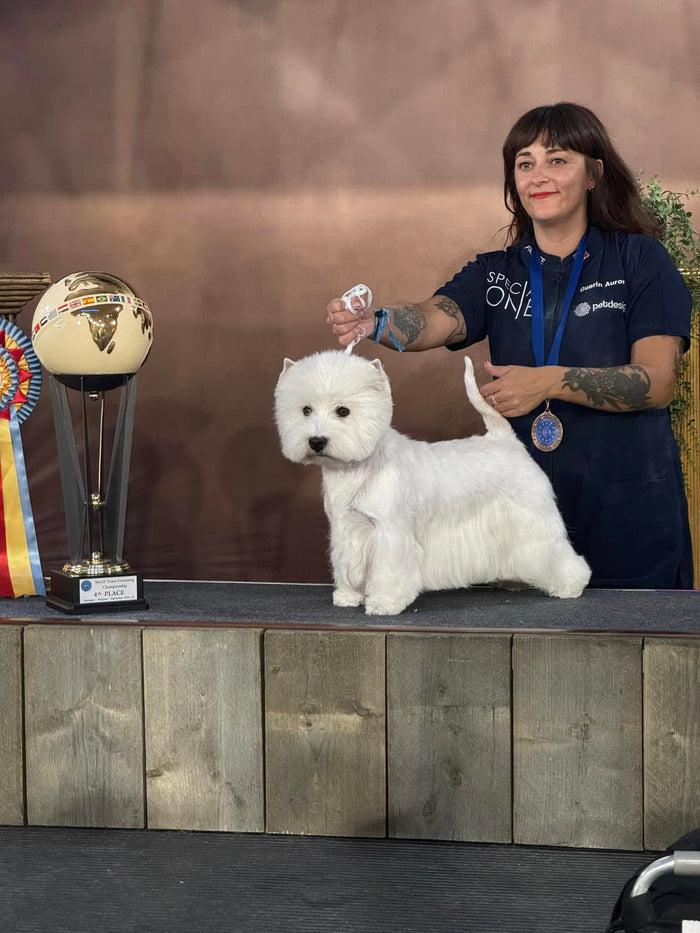
Aurore Guérin's training in Belgium & Special One France on Petdesign.fr
Perfect your technique with Aurore Guerin, a grooming champion! Dog grooming enthusiasts, this training da...
14 janvier 2025
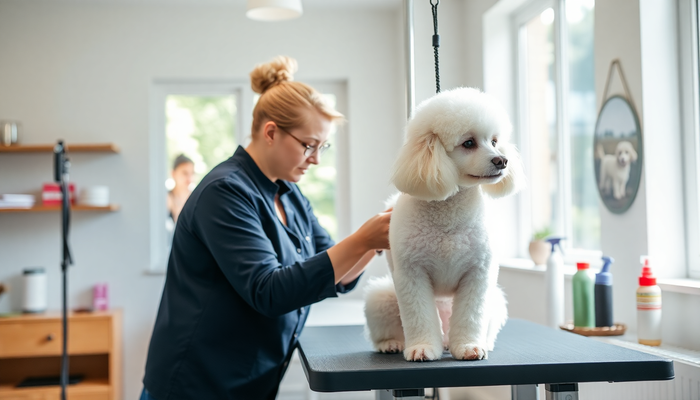
Perfect Poodle Grooming: Expert Advice for an Impeccable Coat
Do you own a poodle and are looking for the best grooming tips? You've come to the right place! In this art...
Réagir à cet article